Mon–Sat: 9 Am - 08 Pm
Call Us: +92-313-5993989
  • English
  • اردو

Clinical Audiology & Neural Diagnostics

Specialized Hearing Evaluations

We Offer Advanced Clinical Audiological Assessments For Infants, Young Children, And Complex Diagnostic Cases. Get Objective, Scientific Results From Specialized Neural Testing.
100% Objective Measurement
Infant & Pediatric Safe
Auditory Pathway Mapping
Gold Standard Diagnostics

Advanced electrophysiological neuro-audiological hearing evaluation laboratory

Electrophysiology
Live Wave V Signal Acquisition

4 Core Protocols
ABR, ASSR, ABLB/SISI, SRT Diagnostic Suite

100% Objective
No Active Behavioral Response Needed

Pediatric Ready
Comfortable Non-Invasive Infant Evaluation

Expert Diagnosis
Certified HCPC Registered Clinical Report

Electrophysiology

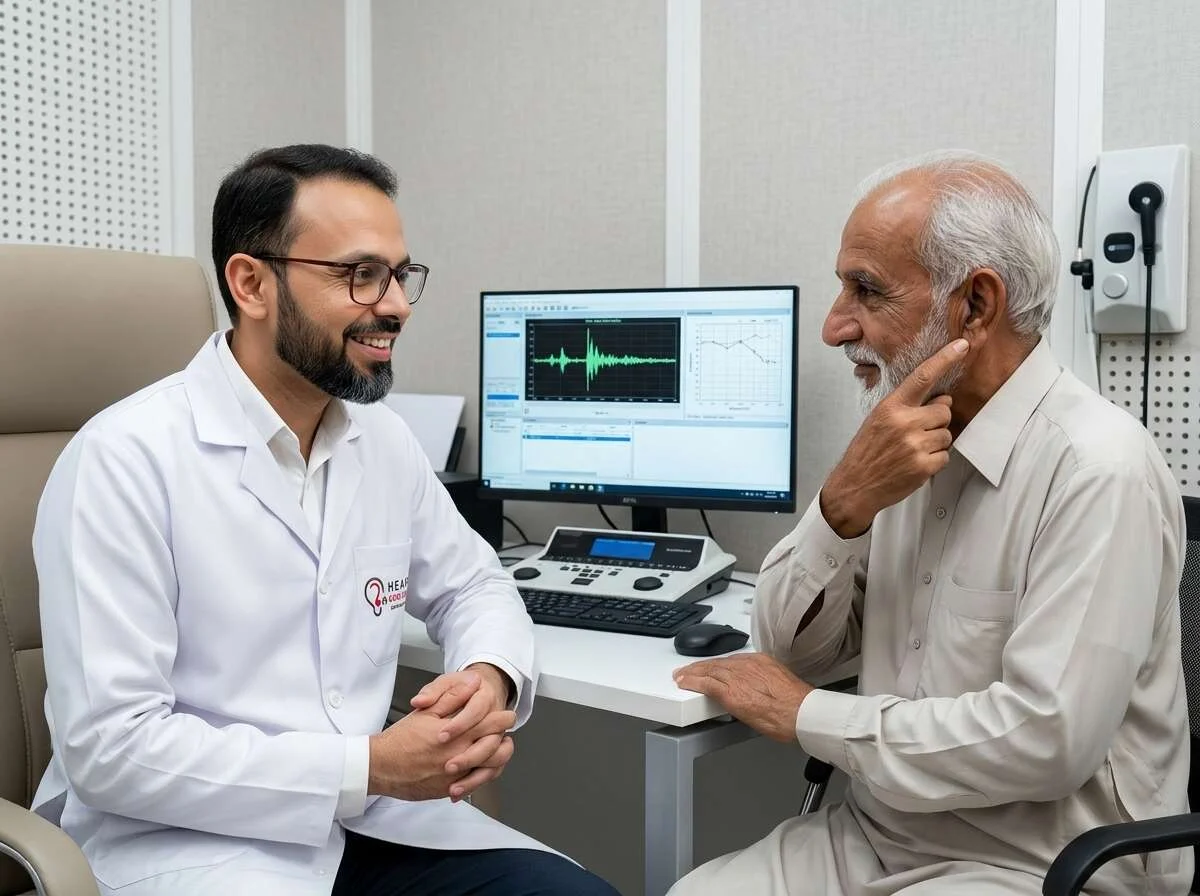
1. Auditory Brainstem Response (ABR)

An Advanced Electrophysiological Assessment Mapping Neural Activity From The Auditory Nerve Up To The Brainstem. It Provides Critical, Objective Diagnostic Data For Newborn Infant Screenings, Pediatric Threshold Estimations, And Retrocochlear Pathway Evaluations.

  • Completely Objective — Requires No Active Voluntary Response Or Speech Feedback From The Patient.
  • Highly Comfortable — Safely Performed While Infants Or Children Are Naturally Sleeping Or Relaxed.
  • Newborn Gold-Standard — The Premier Screening Method For Early Detection Of Pediatric Auditory Deficits.
  • Retrocochlear Diagnosis — Assists In Localizing Auditory Pathway Lesions And Acoustic Neuroma Symptoms.
  • Auditory Neuropathy Detection — Crucial For Identifying Neural Synchrony Issues In Complex Cases.
Evaluates Wave I Through Wave V Electrical Potential Latencies Along VIIIth Cranial Nerve.

Auditory Brainstem Response ABR Clinical Neural Sensor Hearing Test
Duration
30–45 Mins
Patient Age
Infants & All Ages
Diagnostic Accuracy
100% Objective
Clinical Grade ISO-Calibrated Evoked Potential Equipment

Objective Thresholds

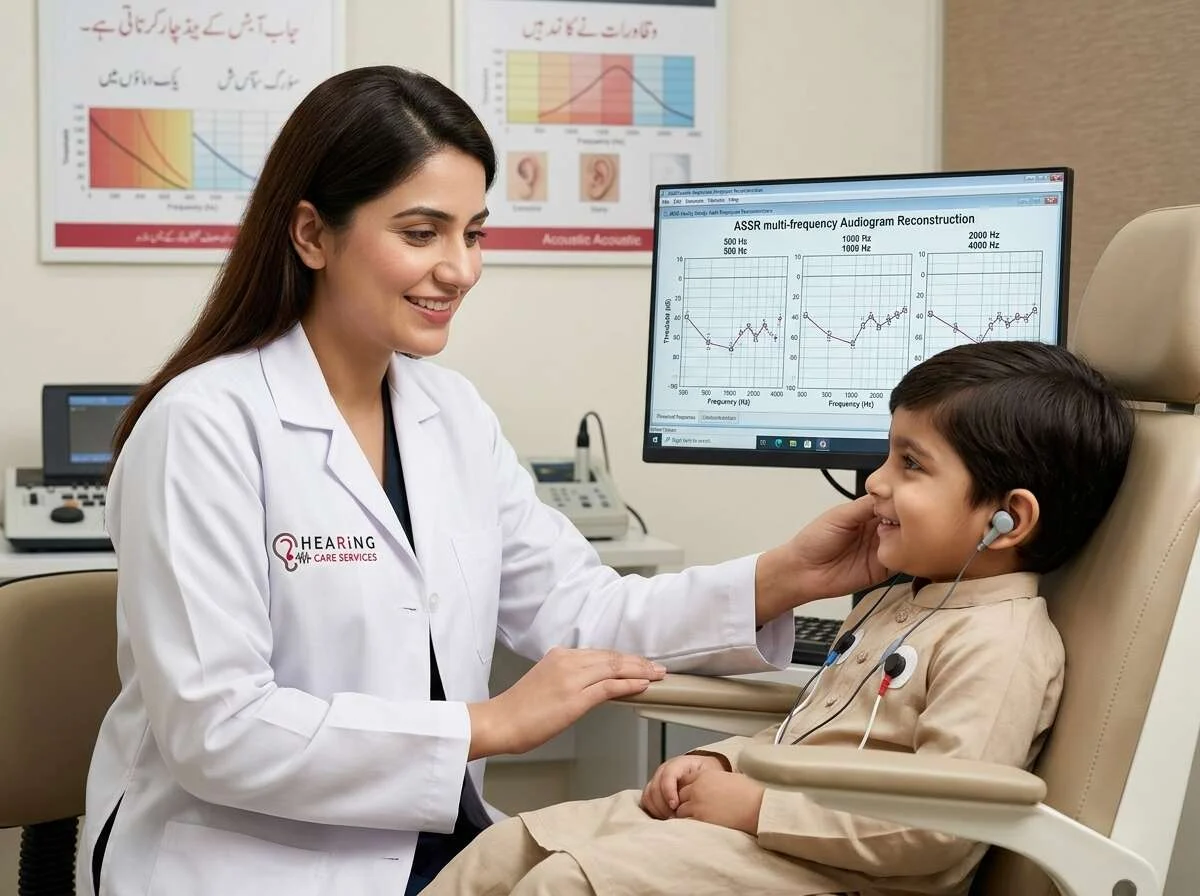
2. Auditory Steady-State Response (ASSR)

An Objective Electrophysiological Threshold Evaluation That Utilizes Frequency-Specific Continuous Stimuli To Reconstruct Detailed Audiograms. By Analyzing Phase-Locked Neural Responses, ASSR Bridges The Gap When Behavioral Testing Is Impossible.

  • Frequency-Specific Audiograms — Reconstructs Detailed Thresholds For 500 Hz, 1000 Hz, 2000 Hz, And 4000 Hz.
  • Severe-To-Profound Loss Evaluation — Uniquely Suited To Differentiate Severe From Profound Hearing Loss.
  • Dual-Ear Simultaneous Testing — Tests Multiple Frequencies In Both Ears Simultaneously For Faster, Precise Diagnostic Acquisition.
  • Air & Bone Conduction Support — Captures Objective Values For Both Conduction Types To Determine Hearing Loss Classification.
  • Direct Amplification Mapping — Provides The Exact Numerical Values Needed To Program Digital Hearing Aids And Cochlear Implants.
Essential For Precise Hearing Aid Fitting & Pediatric Amplification Programming.

Auditory Steady State Response ASSR frequency hearing threshold graph
Duration
30–40 Mins
Target Range
0.5k – 4k Hz
Neural Response
Objective Multi-Frequency
Dual-Ear Phase-Locked Neural Acquisition System

Cochlear Localization

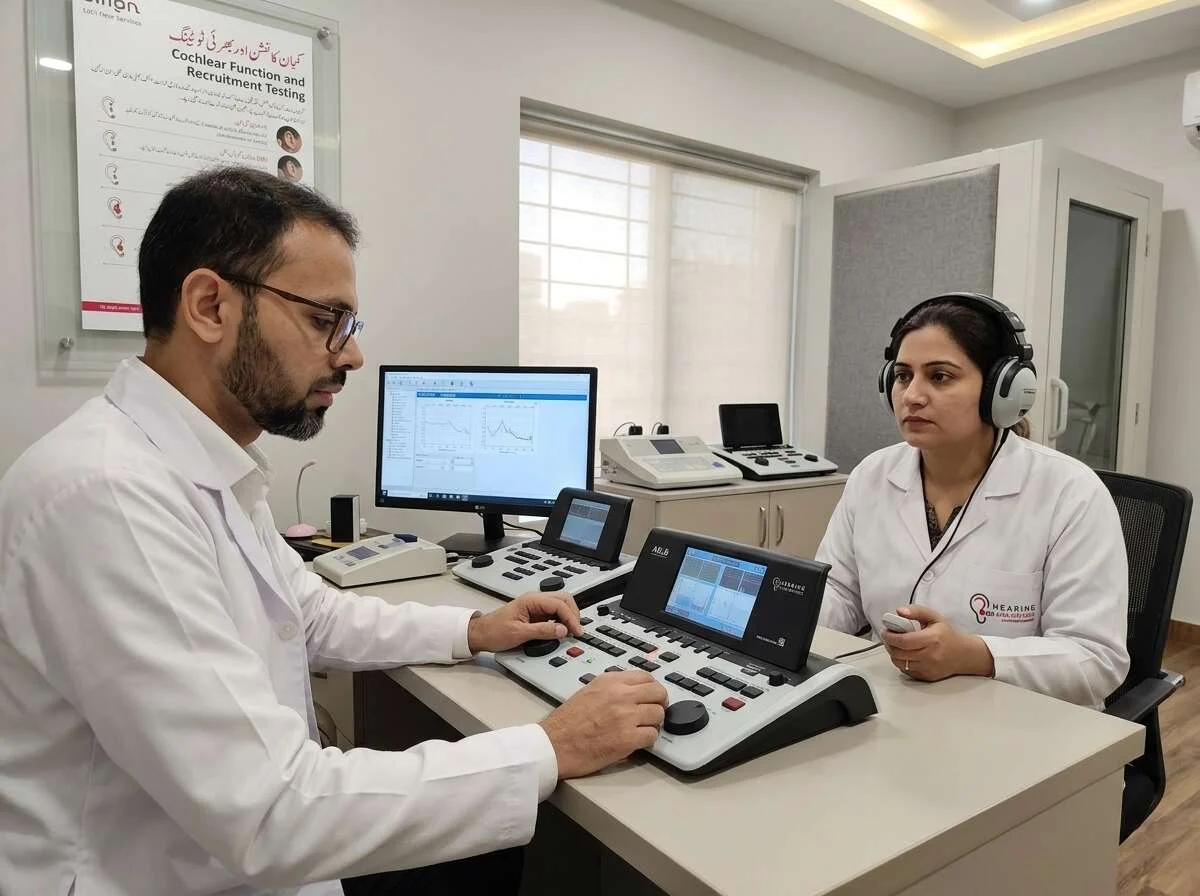
3. Recruitment Tests (ABLB & SISI)

Specialized Behavioral Tests Designed To Evaluate Loudness Growth Abnormal Patterns, Helping Clinicians Localize Auditory Path Damage. By Comparing Auditory Sensitivity, These Tests Differentiate Between Sensory (Cochlear) And Neural (Cranial Nerve) Lesions.

  • ABLB Loudness Balancing — Compares Loudness Growth Between A Normal And Impaired Ear To Isolate Recruitment.
  • SISI Increment Sensitivity — Checks The Patient’S Ability To Detect Tiny 1 DB Amplitude Increments At High Levels.
  • Site-Of-Lesion Localization — Clearly Distinguishes Cochlear Sensory Issues From Retrocochlear/Neural Pathology.
  • Meniere’S Disease Screening — Assists In Diagnostic Tracking Of Endolymphatic Hydrops And Related Disorders.
  • Differential Diagnostic Integrity — Provides Crucial Qualitative Verification Alongside Pure-Tone Averages.
ABLB (Alternate Binaural Loudness Balance) & SISI (Short Increment Sensitivity Index) Yield Definitive Cochlear Differential Data.

Alternate Binaural Loudness Balance ABLB and SISI Cochlear Recruitment Test
Duration
20–30 Mins
Sensitivity Increment
1 dB Steps
Lesion Localization
Cochlear vs Neural
Differential Diagnostic Loudness Growth Assessment

Speech Recognition

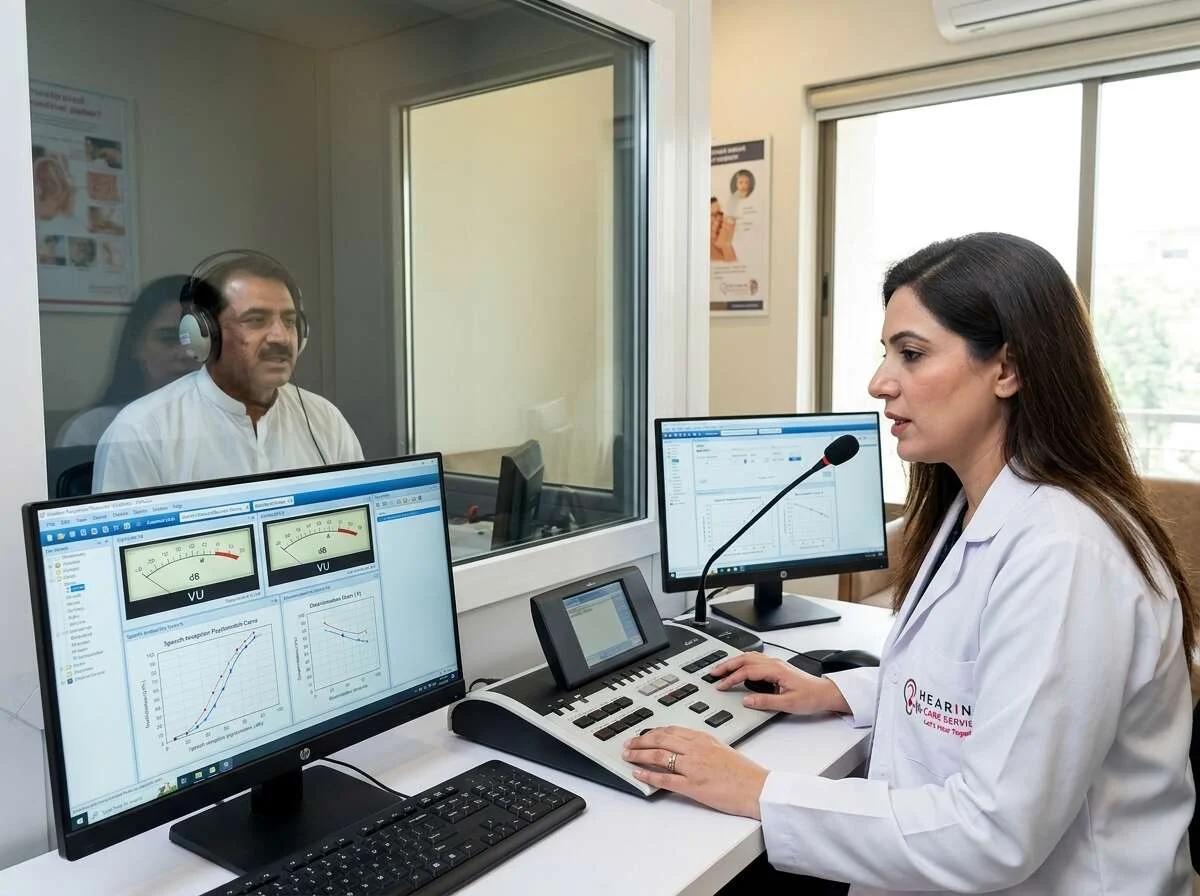
4. Speech Reception Threshold (SRT)

A Standardized Audiometric Assessment Measuring The Lowest Decibel Level At Which A Patient Can Successfully Repeat 50% Of Spoken Spondaic Words. SRT Serves As A Vital Cross-Check For Overall Test Reliability And Real-World Hearing Clarity.

  • PTA Cross-Check Verification — Validates Pure-Tone Average Reliability, Ensuring Accuracy Within ±5 DB.
  • Spondaic Word Comprehension — Uses Phonetically Balanced Two-Syllable Words (Spondees) To Determine Recognition Thresholds.
  • Social Communication Assessment — Measures The Patient’S Functional Auditory Reception In Everyday Conversation Levels.
  • Cochlear Function Validity — Helps Identify Potential Developmental Speech Delay Risks In Children.
  • Rehabilitation Outcome Guidance — Serves As A Baseline To Predict Future Performance With Amplification Systems.
Validates Pure Tone Average (PTA) Within ±5 DB For Clinical Consistency.

Speech Reception Threshold SRT Audiometric Soundproof Booth Test
Duration
15–20 Mins
Cross-Check Accuracy
±5 dB PTA Match
Speech Material
Spondaic Words
Soundproof Audiometric Booth & Calibrated Acoustic Suite

Specialized Diagnostic Protocol Matrix

A Comprehensive Overview Of Our Specialized Diagnostic Tests, Patient Suitability, And Objective Clinical Outcomes.

Test Protocol Target Patient Group Methodology Primary Clinical Objective Patient Participation
ABR (Auditory Brainstem Response) Infants, Toddlers, Non-Cooperative Adults Electrophysiological Surface Electrodes Tracking Neural Brainstem Waves Objective Hearing Threshold & Retrocochlear Pathway Integrity Passive (Sleeping / Relaxed)
ASSR (Auditory Steady-State Response) Pediatric Candidates, Severe Hearing Loss Frequency-Specific Continuous Tone Stimulation Analysis Reconstructing Detailed Air & Bone Conduction Threshold Curves Passive (No Active Response)
ABLB & SISI (Recruitment Tests) Sensory Vs Neural Lesion Suspects Binaural Loudness Balancing & 1dB Intensity Increment Detection Localizing Cochlear Sensory Recruitment Vs VIIIth Nerve Lesions Active (Behavioral Feedback)
SRT (Speech Reception Threshold) Children & Adults (Speech Capable) Spondaic Word Repetition At Threshold Sound Levels Validating Pure-Tone Audiometry & Speech Comprehension Level Active (Word Repetition)

Our Specialized Testing Process

Step-By-Step Diagnostic Journey Designed For Maximum Patient Comfort And Diagnostic Accuracy.

1

Clinical History & Otoscopy

Detailed Review Of Medical History, Ear Canal Otoscopy, And Tympanometry Check Before Testing.

2

Preparation & Calibration

Gentle Placement Of Non-Invasive Surface Sensors Or Specialized Insert Earphones In A Quiet Clinic Suite.

3

Neural Signal Acquisition

Precision Electrophysiological Signal Tracking Or Behavioral Response Gathering Using Calibrated Tools.

4

Comprehensive Diagnostic Report

Detailed Report Generation By Senior HCPC Audiologists With Clear Treatment & Management Recommendations.

Specialized Tests FAQ

Understand How Electrophysiological And Specialized Tests Deliver Objective Results.
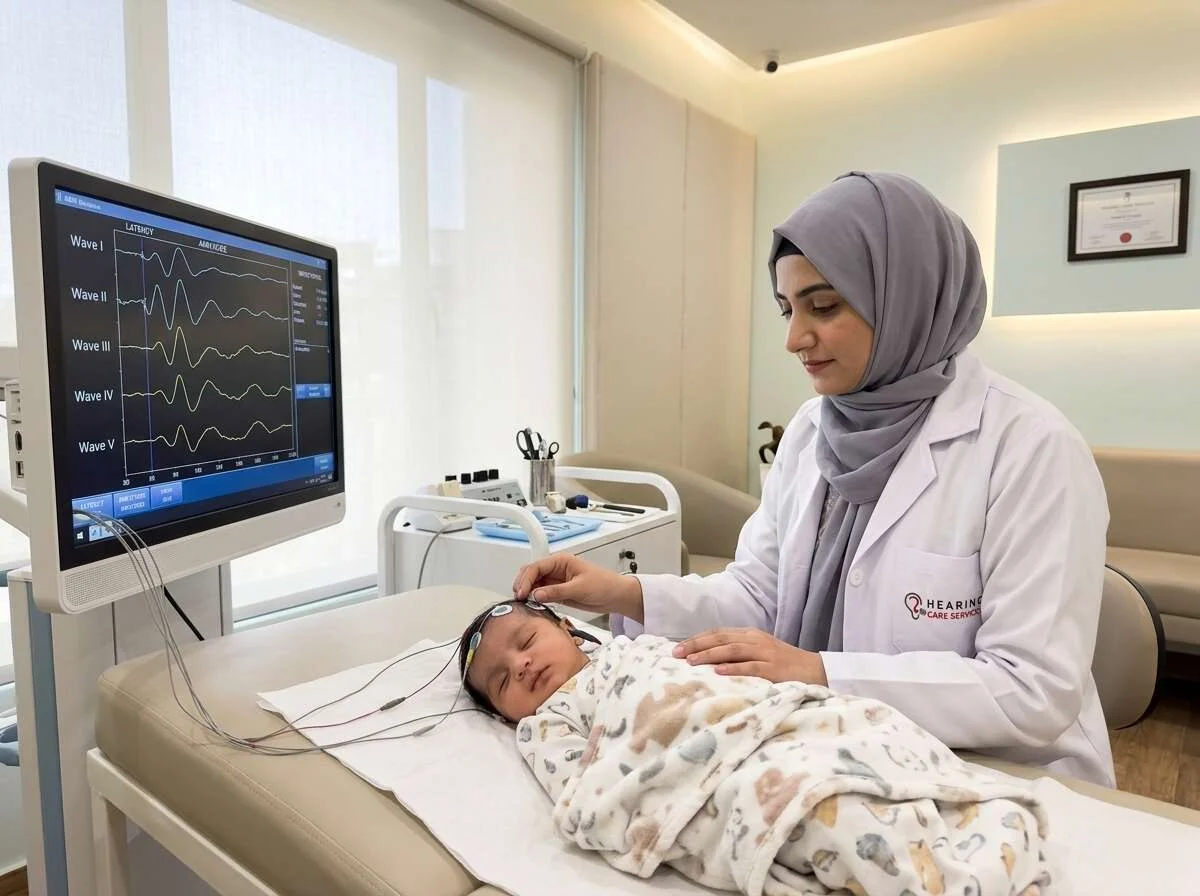
Since Infants Cannot Raise Their Hands Or Respond When They Hear A Sound, ABR Allows Us To Objectively Measure Their Auditory System’S Response. Electrodes Placed On The Baby’S Head Measure The Nerve’S Electrical Signals, Verifying Hearing Health While They Sleep.

Recruitment Is A Condition Where Sounds Become Loud Very Quickly As Volume Increases. For Example, A Soft Sound May Be Inaudible, But A Moderately Loud Sound Feels Piercingly Loud. Recruitment Testing (ABLB) Helps Determine If This Cochlear Pathway Issue Is Present.

Most Electrophysiological Assessments (ABR / ASSR) Take Approximately 45 To 60 Minutes, Which Includes Skin Preparation And Electrode Setup. Behavioral Recruitment (ABLB/SISI) And Speech Threshold Testing (SRT) Take 20 To 30 Minutes.

Yes, Completely Safe And Painless. The Tests Use Soft Surface Sensors Applied With Skin-Friendly Gel. There Are No Electrical Shocks Or Uncomfortable Sensations—The Sensors Simply Measure Tiny Electrical Signals Naturally Generated By The Hearing Nerve.

Book Your Specialized Hearing Evaluation Today

Get Objective, Clinical-Grade Diagnostic Clarity From HCPC Registered Audiologists Equipped With Advanced Electrophysiological Technology.