
Invisible hearing aids in Pakistan provide 100% hidden hearing clarity for individuals who value personal discretion and professional confidence. For decades, the primary reason people delayed treating hearing loss was not the cost, but the fear of wearing a conspicuous, beige plastic device behind the ear. Today, custom micro-miniature engineering makes true cosmetic invisibility a clinical reality.
Quick Answer: Invisible hearing aids in Pakistan (primarily IIC and CIC models) rest deep inside the ear canal, shielded from conversational view. In Pakistan, authentic medical-grade invisible hearing aids cost between PKR 110,000 and PKR 420,000 per ear depending on digital noise cancellation, acoustic channels, and custom titanium or acrylic shell materials. They are engineered for mild-to-moderate hearing loss, though approximately 25% to 30% of patients have ear canals that are too narrow for deep canal placement.
- → What are invisible hearing aids in Pakistan? (IIC vs. CIC)
- → Who is an ideal candidate? The 4 anatomical checks
- → The honest trade-offs: What you gain vs. what you sacrifice
- → Invisible hearing aids in Pakistan: 2026 Price breakdown
- → Top invisible models available from authorized brands
- → Protecting miniature devices in Pakistan’s climate
- → The custom fitting process and Real-Ear Measurement (REM)
- → Warning: Medical hearing aids vs. cheap online amplifiers
- → Frequently asked questions
According to epidemiological studies published by the World Health Organization (WHO) hearing loss database, untreated auditory decline causes significant social isolation and cognitive strain. In Pakistan, many working professionals, university lecturers, and active seniors hesitate to seek treatment because of cosmetic concerns. Choosing certified invisible hearing aids in Pakistan solves this psychological barrier by placing the digital computer entirely out of sight.
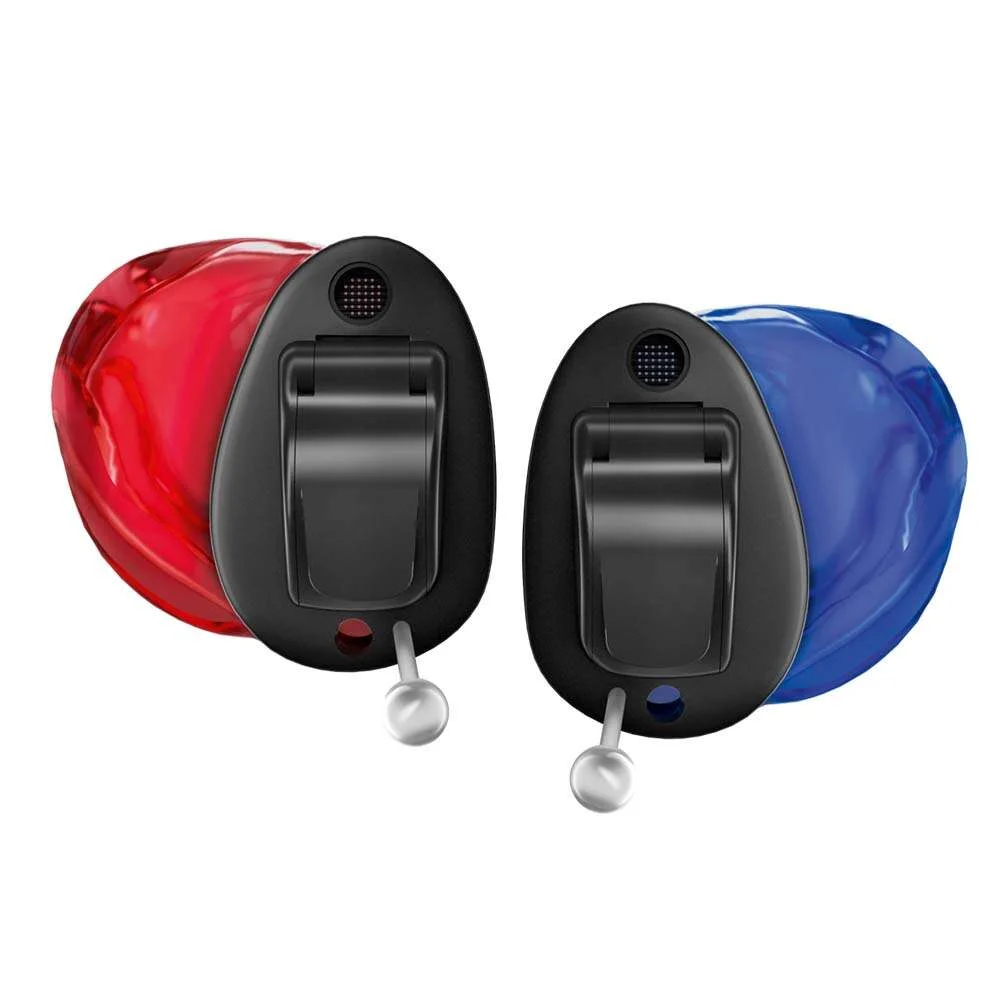
What are invisible hearing aids in Pakistan? Understanding IIC and CIC
When searching for discreet hearing solutions, patients encounter two primary custom in-the-ear styles. Understanding how they fit inside the auditory passage is essential before making an investment.
1. Invisible-in-the-Canal (IIC)
An IIC is the smallest custom hearing instrument manufactured today. It is custom-modeled from a 3D laser scan of your ear canal and sits deep within the bony portion of the canal, past the second anatomical bend. Its faceplate is finished in dark matte black or navy, which absorbs light so the eye perceives it as the ear canal’s natural shadow. Wearers remove the device by gently grasping a transparent monofilament pull-string.
2. Completely-in-the-Canal (CIC)
A CIC is slightly larger than an IIC, resting in the external ear canal opening without protruding into the outer ear concha. Because it has slightly more internal shell volume, it can house larger speakers for patients with moderate-to-severe hearing loss, as well as optional push-buttons for manual program adjustments.
3. Micro Receiver-in-Canal (Micro-RIC) as an Alternative
For patients with exceptionally narrow ear canals, a modern Micro-RIC offers an outstanding alternative. The processor hides discreetly behind the ear cartilage along the hairline, connecting to a micro-speaker via a transparent wire. Many patients discovering our audiological solutions find that a Micro-RIC provides superior smartphone streaming while remaining completely invisible from front-facing angles.
Who is an ideal candidate for invisible hearing aids in Pakistan?
Not every ear can physically accommodate a deep custom canal device. Clinical research compiled by the National Institute on Deafness (NIDCD) on hearing aid types demonstrates that successful custom fittings require specific anatomical and audiometric prerequisites:
- Ear Canal Diameter: An IIC requires a canal width of at least 5 to 6 millimeters and a gentle second curve. If your canal is very narrow or takes a sharp right-angle turn, a rigid acrylic shell will exert uncomfortable pressure on sensitive bony tissue.
- Audiometric Threshold: Deep canal aids work best for mild to moderately-severe hearing loss (25 to 70 dB HL). For profound hearing loss, the micro-speaker cannot deliver enough power without leaking sound back into the microphone, creating feedback whistling.
- Earwax and Moisture Levels: Operating deep inside the canal exposes micro-electronics to cerumen and perspiration. Patients with active ear infections or weeping perforations require open-fit Behind-the-Ear models instead.
- Finger Dexterity: Handling microscopic Size 10 Zinc-Air batteries requires steady hands and good fingertip sensation.
The honest trade-offs: What you gain vs. what you sacrifice
Micro-miniaturization requires engineering trade-offs. To set clear clinical expectations, review this direct comparison between deep invisible aids and slim-tube devices:
| Performance Metric | Invisible-in-the-Canal (IIC) | Micro Receiver-in-Canal (RIC) |
|---|---|---|
| Cosmetic Discretion | 100% hidden in canal shadow | 90% hidden behind hairline |
| Bluetooth Audio Streaming | Unavailable (Radio waves blocked by bone) | Direct streaming for iOS and Android |
| Phone Call Handling | Hold phone naturally against ear | Wireless audio streamed to both ears |
| Rechargeability | Predominantly Size 10 Zinc-Air batteries | All-day Lithium-Ion rechargeable |
| Battery Life | 3 to 5 days per disposable cell | 24 to 36 hours per overnight charge |
| Speech in Dynamic Noise | Uses natural outer ear resonance | Dual directional microphone tracking |
| Vulnerability to Earwax | High (Requires weekly filter checks) | Moderate (Easily replaceable dome) |
A crucial factor to understand is smartphone connectivity. Because 2.4 GHz radio waves cannot penetrate dense human skull bone, true deep IIC hearing aids do not offer direct wireless music streaming. However, you can make phone calls easily by holding your mobile phone against your ear opening, just like someone without hearing loss. If wireless streaming for WhatsApp voice notes and calls is essential, a Micro-RIC or a slightly larger Bluetooth-enabled CIC is recommended.
Invisible hearing aids in Pakistan: 2026 Price breakdown
The cost of authentic hearing aid prices in Pakistan depends on microchip processing power, noise reduction sophistication, and custom shell fabrication. Certified audiology centers categorize devices into four clear tiers:
| Technology Tier | Price Range (PKR / Per Ear) | Ideal Auditory Environments |
|---|---|---|
| 1. Entry Digital Tier | PKR 110,000 – 165,000 | Quiet home conversations, television, one-on-one visits |
| 2. Mid-Range Advanced | PKR 175,000 – 245,000 | Office meetings, family dinners, neighborhood shopping |
| 3. Premium High-Fidelity | PKR 260,000 – 340,000 | Crowded restaurants, weddings, conferences, prayer halls |
| 4. Flagship AI & Titanium | PKR 350,000 – 420,000+ | Complex group speech, dynamic noise, deepest concealment |
Always verify whether quotes are provided per ear or per pair. Custom canal hearing aids are individually 3D-molded and programmed to each ear’s unique prescription, so reputable clinics quote prices per ear.
Top invisible models available from authorized brands in Pakistan
Four world-leading manufacturers supply certified invisible hearing aids in Pakistan through licensed clinical partners:
- Signia Silk Charge&Go IX (Germany): An instant-fit invisible hearing aid utilizing soft silicone click-sleeves. Patients can complete an audiogram, have the devices programmed, and walk out on the same day without waiting two weeks for custom laboratory molding. It also features a pocket-sized wireless charging case.
- Phonak Virto Titanium (Switzerland): Built from medical-grade titanium that is 15 times stronger than acrylic. Shells are 3D-printed at just 0.2mm thickness, enabling 100% deep-canal concealment in narrow ears that cannot fit standard plastic shells.
- Starkey Genesis AI IIC (USA): Equipped with a Neuro Sound processor making 80 million automatic adjustments every hour. Its HydraShield nano-coating repels moisture and earwax, providing vital durability in Pakistan’s summer climate.
- Oticon Own IIC (Denmark): Engineered on the BrainHearing platform, preserving 360-degree environmental sound awareness so wearers can follow conversations without mental fatigue.
Protecting miniature devices in Pakistan’s climate
Over 40% of hearing aid repairs in Pakistan stem from preventable moisture and earwax buildup. Monsoon humidity during July, August, and September, combined with summer temperatures exceeding 40°C, can damage miniature circuitry if proper care is neglected:
- Check the Wax Guard Weekly: Every invisible aid features a tiny white CeruStop or ProWax filter at the sound nozzle. Inspect it weekly and replace it whenever earwax is visible. Never clean the nozzle with pins or needles, as this punctures the delicate speaker membrane.
- Use an Electronic UV-C Dehumidifier: Standard silica gel jars are often inadequate during intense monsoon humidity. Placing your custom hearing aid in an active electronic drying station overnight evaporates trapped canal moisture and sanitizes the shell against fungal infections.
- Dry the Canal Before Insertion: In hot weather, dry your ear opening with a clean tissue before inserting the device to prevent sweat from lubricating the canal and causing the shell to slip out.
If you experience earwax buildup, visit our clinic for gentle, water-free professional earwax removal to keep your canal clean and clear.
The custom fitting process and Real-Ear Measurement (REM)
Achieving clear sound with an invisible aid requires scientific accuracy. At Hearing Care Services, every patient undergoes a thorough 5-stage clinical fitting protocol:
- Video Otoscopy: High-definition inspection of the ear canal and eardrum to confirm absence of cerumen impaction or anatomical abnormalities.
- Sound-Booth Diagnostic Audiometry: Full air and bone conduction testing according to clinical guidelines from the American Academy of Audiology (AAA).
- Deep-Canal Silicone Impression: An experienced audiologist places a protective cotton dam deep in the canal before injecting medical silicone to capture the exact shape of your second bend.
- 3D Shell Fabrication: The impression is laser-scanned to print an ergonomic, featherlight custom shell.
- Real-Ear Measurement (REM): A hair-thin probe microphone measures exact decibel output at your eardrum. Amplification is adjusted until sound precisely matches clinical prescriptive targets, preventing muffled speech or harshness.
Explore our complete hearing aid fitting with Real-Ear Measurement protocol to understand why verified fitting prevents 80% of device returns.
Warning: Medical hearing aids vs. cheap online amplifiers
Online marketplaces like Daraz and AliExpress frequently advertise “mini invisible hearing aids” for PKR 3,000 to PKR 8,000. Consumers must understand that these are crude personal sound amplifiers (PSAPs), not medical devices.
Cheap analog amplifiers lack digital signal processors and output limiters. They amplify all sounds equally—traffic noise, clattering dishes, and loud shouts—delivering dangerous acoustic blasts above 120 decibels directly into your eardrum. This can permanently destroy surviving cochlear hair cells. Never gamble with cheap online amplifiers for yourself or an aging parent.
Frequently asked questions about invisible hearing aids in Pakistan
Can anyone see an IIC hearing aid from the side?
In over 95% of patients with suitable canal anatomy, an IIC cannot be seen from conversational distances. Because it sits past the second bend in the canal’s natural shadow, casual observers cannot detect it. Only an audiologist using an otoscope with direct light can see the device.
Do invisible hearing aids help with tinnitus?
Yes. Many modern digital invisible aids include built-in sound masking generators. By gently amplifying ambient background sounds, they naturally mask internal ringing. Learn more about our specialized tinnitus treatment in Pakistan.
Will an invisible hearing aid fall out while eating or talking?
When custom-molded from a high-precision silicone impression that accounts for jaw motion, the shell locks securely into your canal walls and will not fall out during talking or chewing.
Where can I test invisible hearing aids in Pakistan?
You can schedule an evaluation at Hearing Care Services in Saddar Rawalpindi, with home visit services also available across Islamabad, Rawalpindi, Lahore, and Karachi. Call +92-313-5993989 to book your diagnostic appointment.
Book an Invisible Hearing Aid Assessment
Discover whether your ear canal qualifies for 100% invisible hearing correction. Schedule a comprehensive diagnostic test and trial session with our certified audiology team.